From medieval commune to Renaissance capital
Every museum room, frescoed chapel, and stone facade in Florence carries a chapter of a much larger human story.
Table of Contents
Before the Renaissance: foundations of Florence
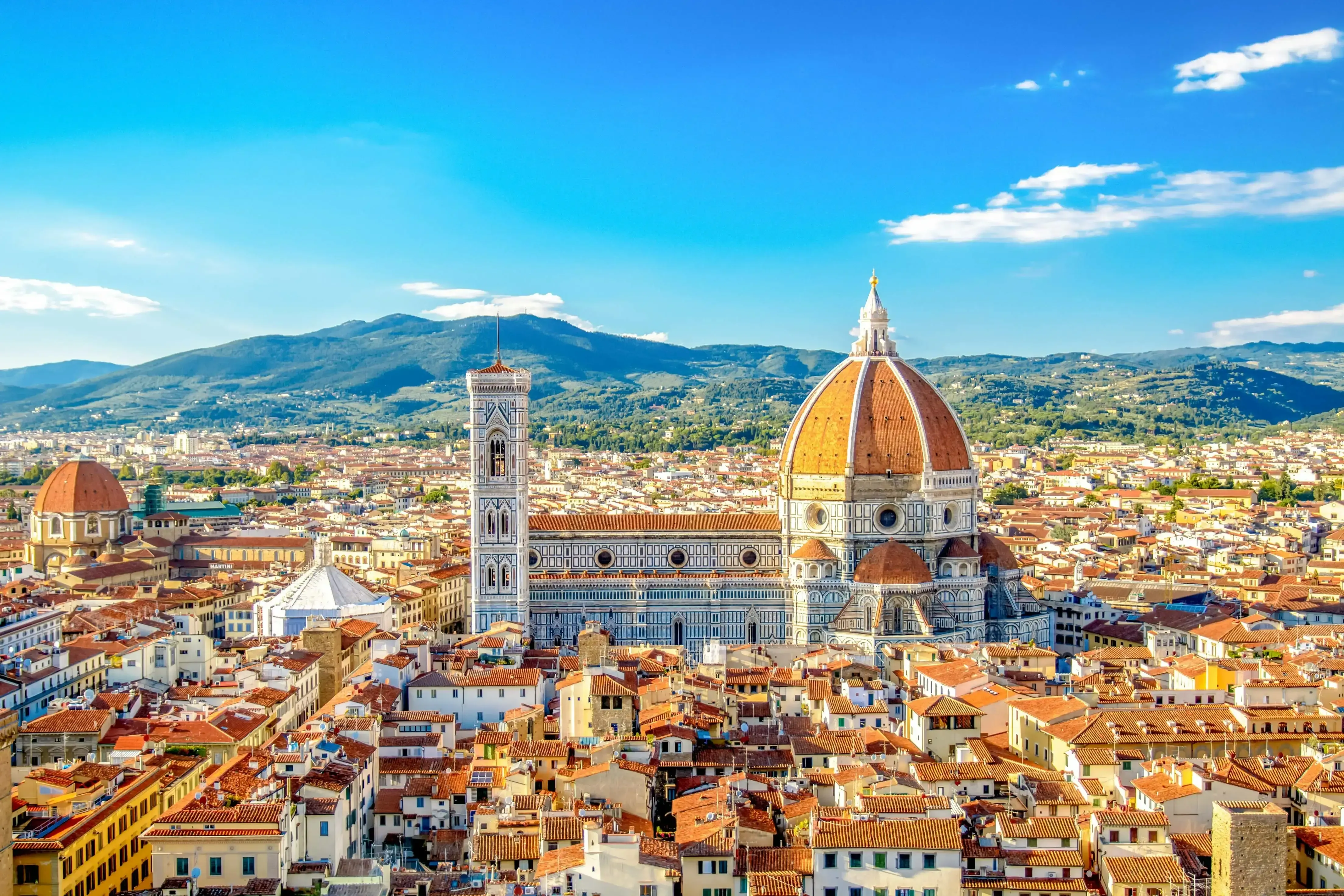
Long before Florence became the stage for Renaissance genius, it was a Roman settlement known as Florentia, strategically placed along trade and military routes in the Arno valley. After the fragmentation of Roman authority, the city passed through unstable centuries marked by conflict, local elites, and shifting political loyalties. Yet these difficult centuries also forged the urban resilience that would later define Florence: a civic culture rooted in negotiation, competition, and institutional innovation.
By the High Middle Ages, Florence had become a dynamic commune with expanding walls, active guilds, and a rising merchant class. Its streets were crowded with workshops, markets, and parish life, and its social fabric was shaped by both collaboration and rivalry among powerful families. What visitors now admire as elegant stone architecture was born from turbulent beginnings. Seen through this lens, the Florence Card is not simply a pass for museum entry; it is a key to understanding how a city transformed instability into one of history's most enduring cultural revolutions.
Guilds, republics and urban identity
Florence's political identity grew from its guild system, where economic corporations did far more than regulate crafts. Major and minor guilds influenced public administration, taxation, diplomacy, and social order. In effect, the city experimented with forms of republican government that linked commercial success to civic responsibility. This framework did not produce harmony, but it generated an extraordinary public energy that pushed architecture, education, and patronage forward.
Piazza della Signoria embodies this civic DNA. The square, with Palazzo Vecchio as its commanding anchor, became a theater of policy, ritual, protest, and celebration. Public sculpture and civic pageantry communicated ideals of justice, strength, and legitimacy to residents and visitors alike. When you stand there today, you are standing in a place where politics and art were never separate spheres but two languages describing the same social ambition: to make the city visible, persuasive, and memorable.
The rise of banking and civic power
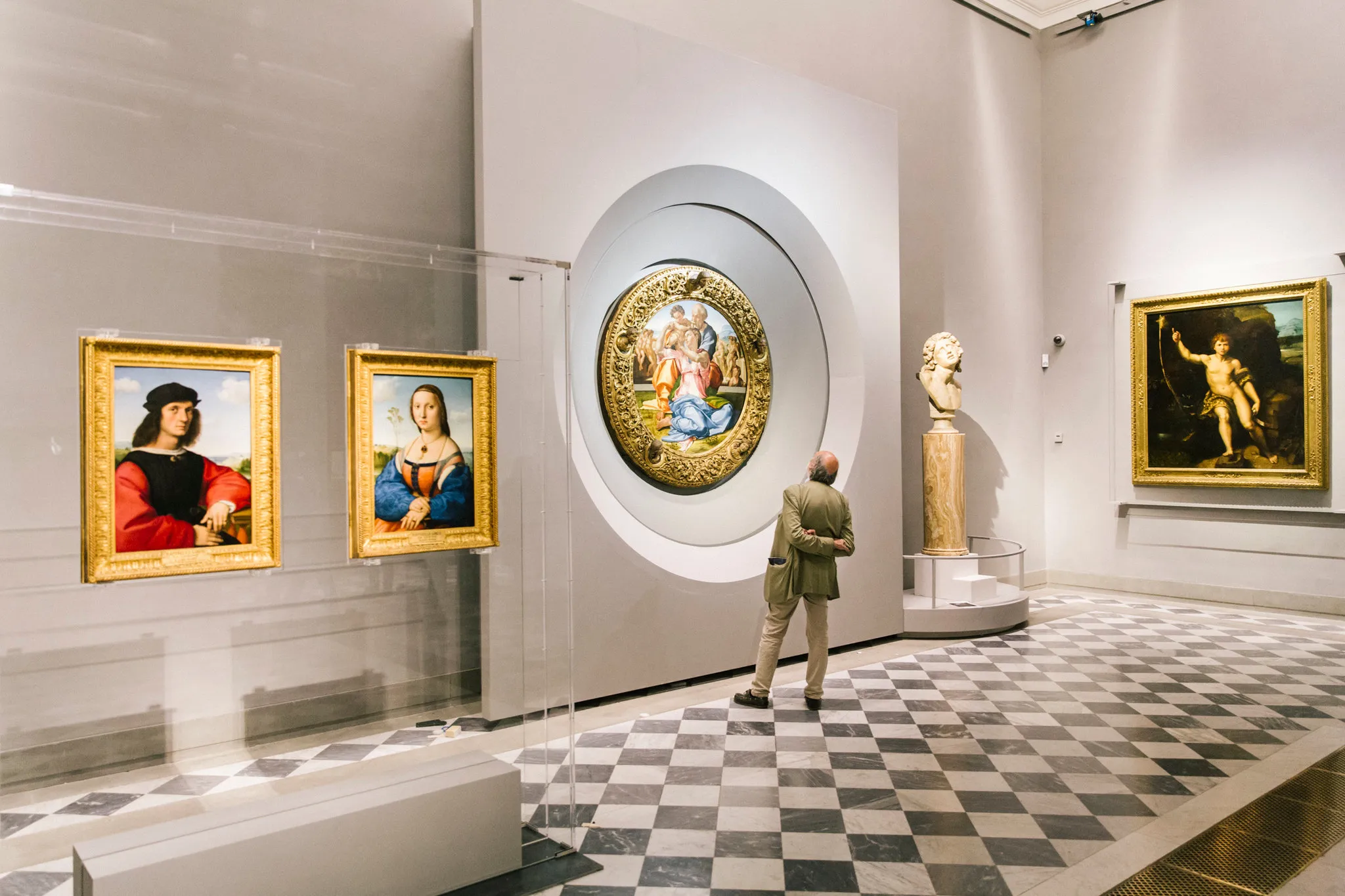
Florence's ascent cannot be understood without its financial system. Merchant-bankers developed sophisticated instruments of credit, accounting, and international exchange that connected the city to markets across Europe. Wealth produced by wool, silk, and finance did not remain abstract. It flowed into churches, chapels, libraries, hospitals, roads, and eventually collections that still define the city's museum landscape.
Families and companies competed not only for profit but for prestige and political influence. Patronage became a strategic language: funding an altarpiece, façade, or charitable foundation could reinforce both spiritual reputation and social authority. The result was a city where economic intelligence and visual culture evolved together. This is one reason Florence feels uniquely coherent to modern visitors: money, belief, status, and beauty were continuously negotiated in public view.
Humanism and the rebirth of classical thought
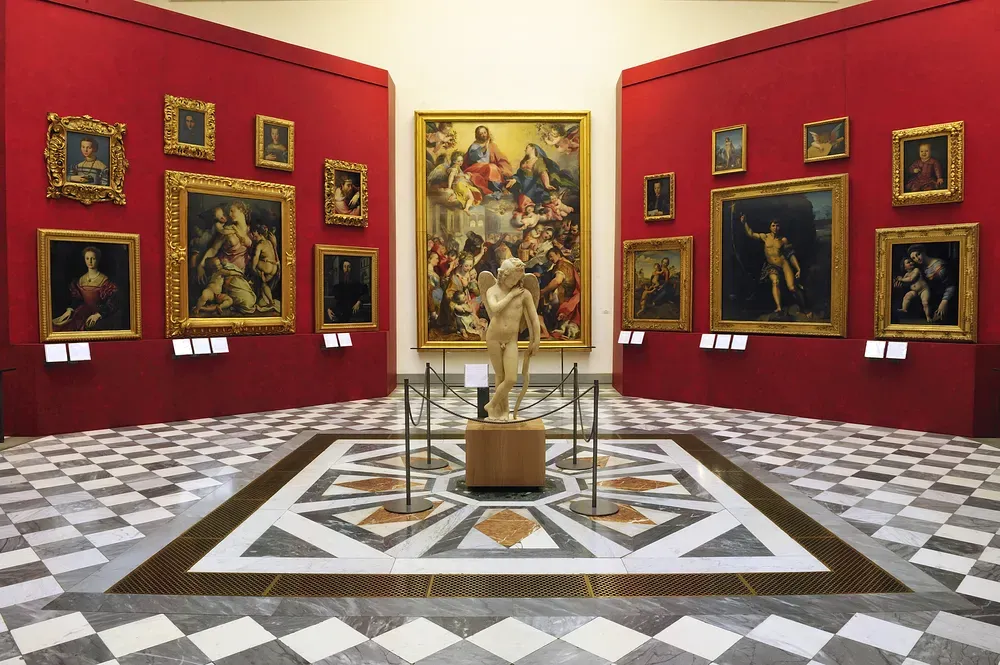
The Renaissance in Florence was not only an artistic style; it was an intellectual project. Humanists studied Greek and Roman texts, refined philology, debated ethics and governance, and developed educational ideals centered on rhetoric, history, and moral philosophy. Their work reframed the relationship between antiquity and the present, inspiring artists and patrons to imagine a new visual and civic language grounded in observation, proportion, and historical consciousness.
This cultural shift influenced everything from portraiture to urban planning. Classical motifs became tools for contemporary identity, and artists were increasingly seen as thinkers, not mere craftsmen. In practical terms, this meant that paintings and sculptures communicated more than religious devotion: they expressed intellect, status, memory, and civic belonging. A Florence Card itinerary through major collections reveals this transformation room by room, as medieval formulas gradually open into a broader and more self-aware vision of humanity.
The Medici: patrons, politicians, image-makers
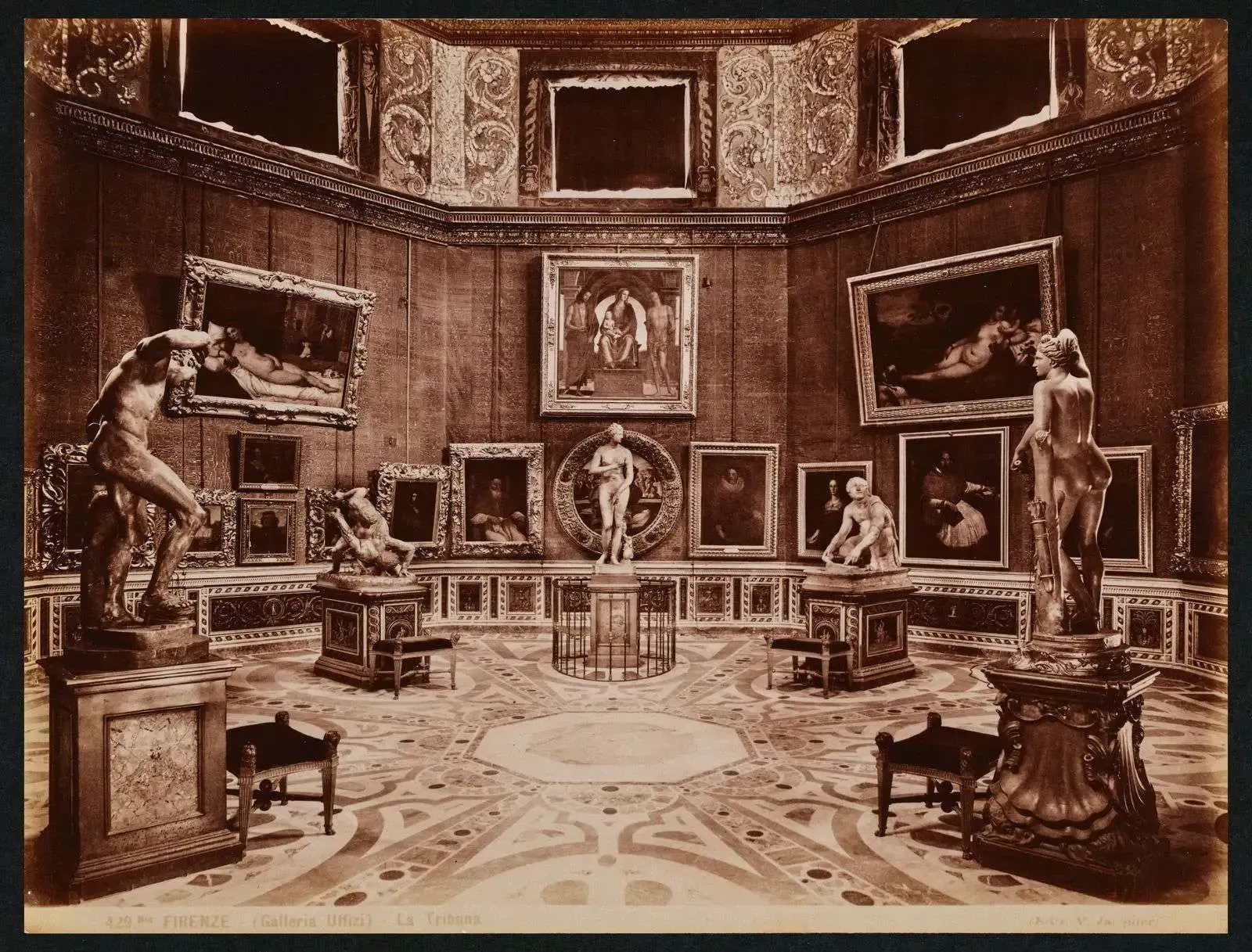
No account of Florence is complete without the Medici, the banking dynasty that became one of the most influential patron families in European history. Their power operated through diplomacy, strategic marriages, financial networks, and calculated cultural investments. Commissioning architecture, collecting antiquities, and supporting artists were not decorative hobbies; they were instruments of authority that helped shape public memory and political legitimacy.
Yet Medici patronage was never isolated from broader Florentine society. Rival families, religious institutions, and civic authorities all negotiated influence in parallel, creating a dense ecosystem of patronage. Visiting Medici-associated sites today reveals this layered story: private ambition translated into public form, domestic spaces turned into cultural statements, and dynastic narratives embedded into the visual identity of the city itself.
Cathedrals, domes and engineering revolutions
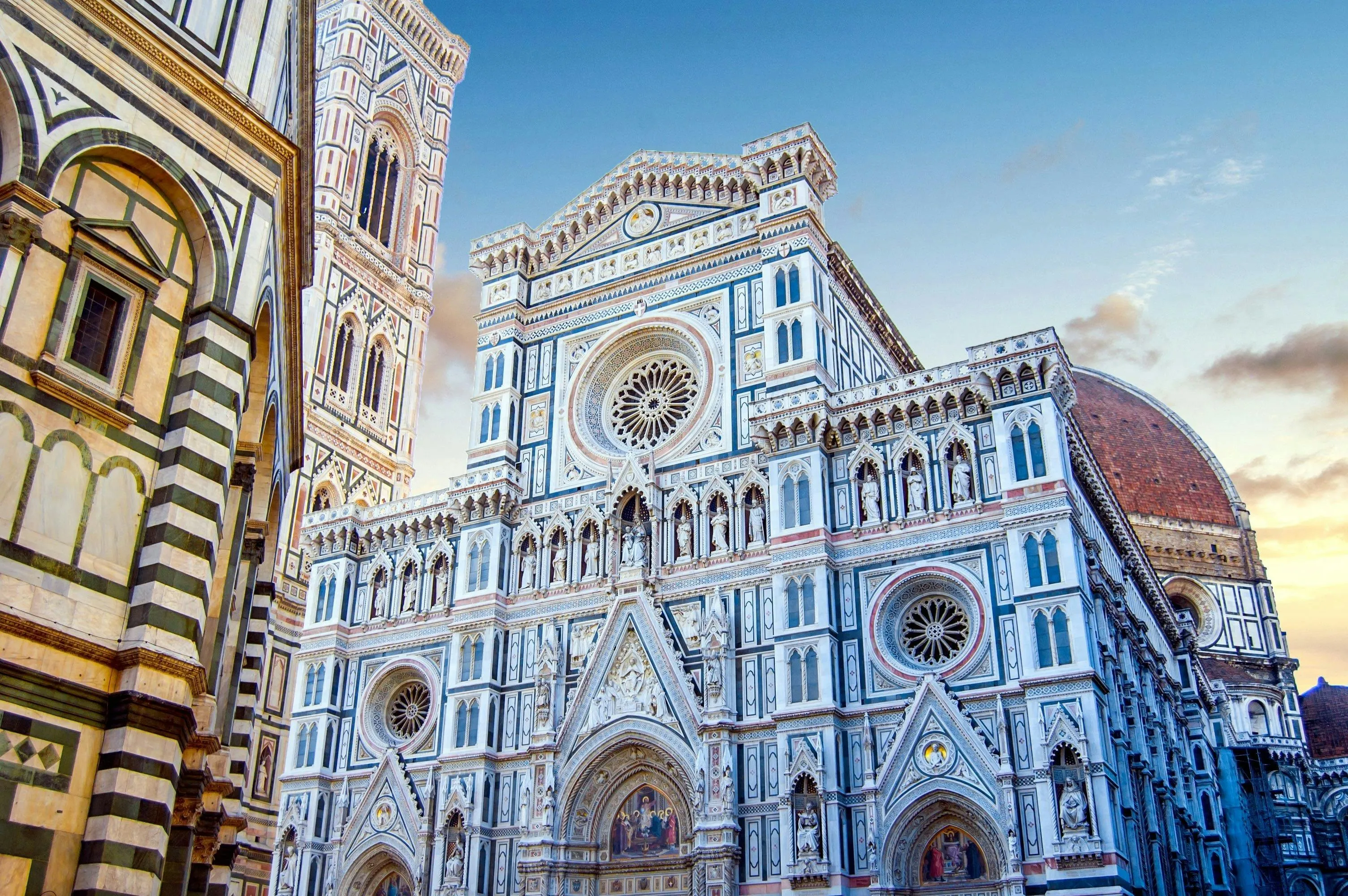
Florence Cathedral and Brunelleschi's dome symbolize a turning point in architectural history. Building a vast masonry dome without traditional centering was not only a technical challenge but a statement of civic confidence. The project demanded mathematical ingenuity, material experimentation, and organizational coordination on a scale that captured the imagination of Europe.
The dome's silhouette still defines Florence, but its deeper significance lies in what it represents: a culture willing to merge craft knowledge, scientific curiosity, and public ambition. This engineering breakthrough inspired generations of architects and remains one of the clearest examples of Renaissance innovation in practice. Seeing it in context with nearby museums helps visitors understand that Florence's greatness was built as much by problem-solving as by inspiration.
Painting, sculpture and the new language of art
From Giotto's narrative clarity to Masaccio's volumetric realism, from Botticelli's poetic allegories to Michelangelo's monumental human form, Florence produced a visual vocabulary that transformed Western art. Perspective, anatomy, light, and emotional expression were studied with unprecedented intensity. Artists engaged with theology, philosophy, antiquity, and direct observation, creating works that still feel startlingly present.
What makes Florence unique is the continuity between workshop practice and institutional memory. Many sites included in Florence Card itineraries preserve not only finished masterpieces but also the contexts that produced them: patron chapels, civic spaces, monastic settings, and collection histories. As you move between these spaces, art history stops being abstract chronology and becomes a lived narrative of experimentation, influence, and ambition.
Faith, reform and public life
Religion shaped Florentine life at every level, from neighborhood confraternities to major ecclesiastical institutions. Churches were spaces of worship, but also repositories of art, sites of social aid, and stages for political symbolism. Sermons, processions, and devotional practices influenced public values and private behavior in ways that left permanent marks on the cityscape.
Periods of reform and tension, including the dramatic era associated with Savonarola, reveal how deeply moral discourse could affect art, collecting, and governance. Some works were celebrated, others challenged, and the city repeatedly renegotiated the relationship between beauty, authority, and belief. For modern visitors, this history adds nuance to every chapel and fresco: these were not static objects, but participants in urgent civic debates.
Courts, collections and museum origins
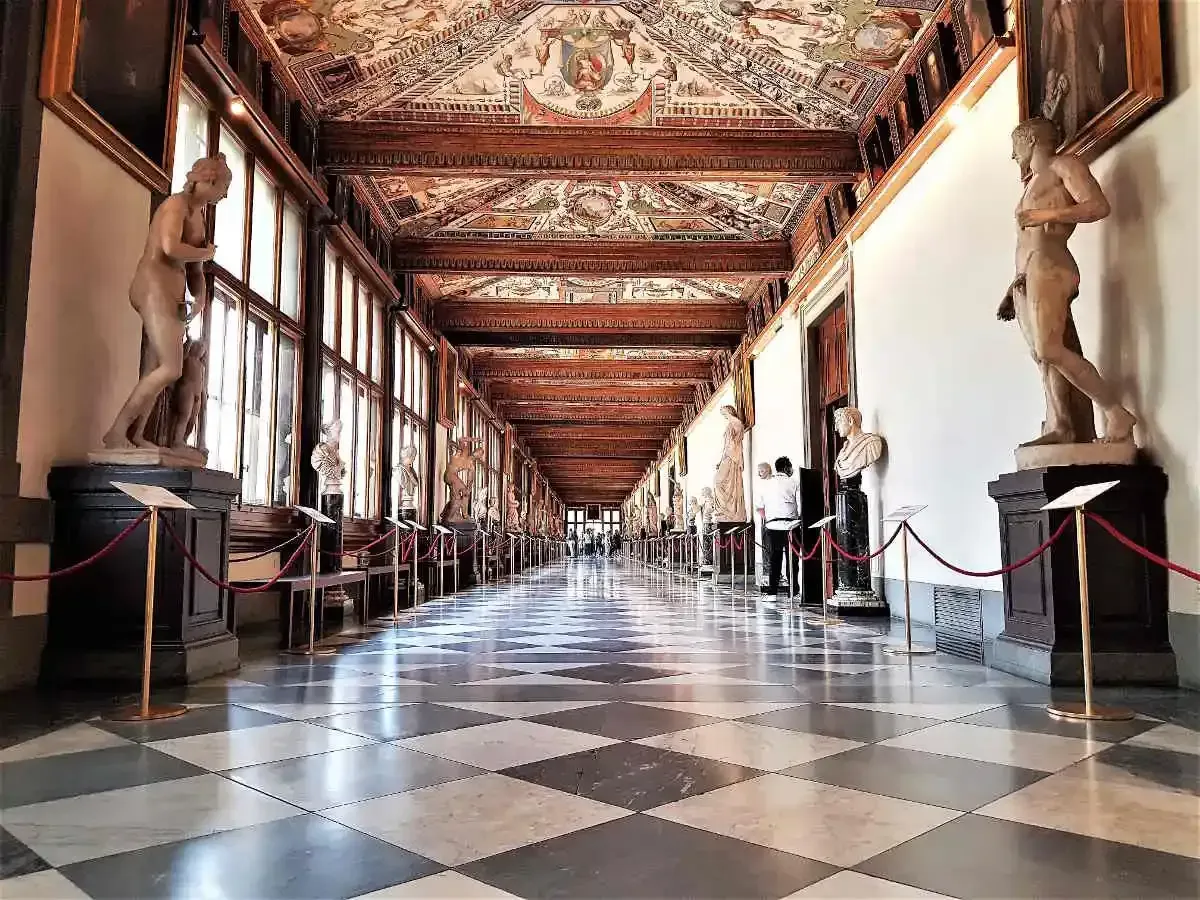
The museums visitors enjoy today emerged from centuries of collecting by courts, churches, scholars, and civic bodies. In Florence, dynastic collections gradually moved from private prestige to public patrimony, especially as political structures changed and cultural heritage became tied to civic identity.
This transition from princely possession to shared cultural resource is one of Florence's most important historical achievements. The Florence Card reflects this long arc: what was once accessible to narrow elites is now open, interpretive, and globally valued. Each ticket scan at a museum entrance quietly participates in that history of democratizing access to art.
Grand duchy to modern Italy
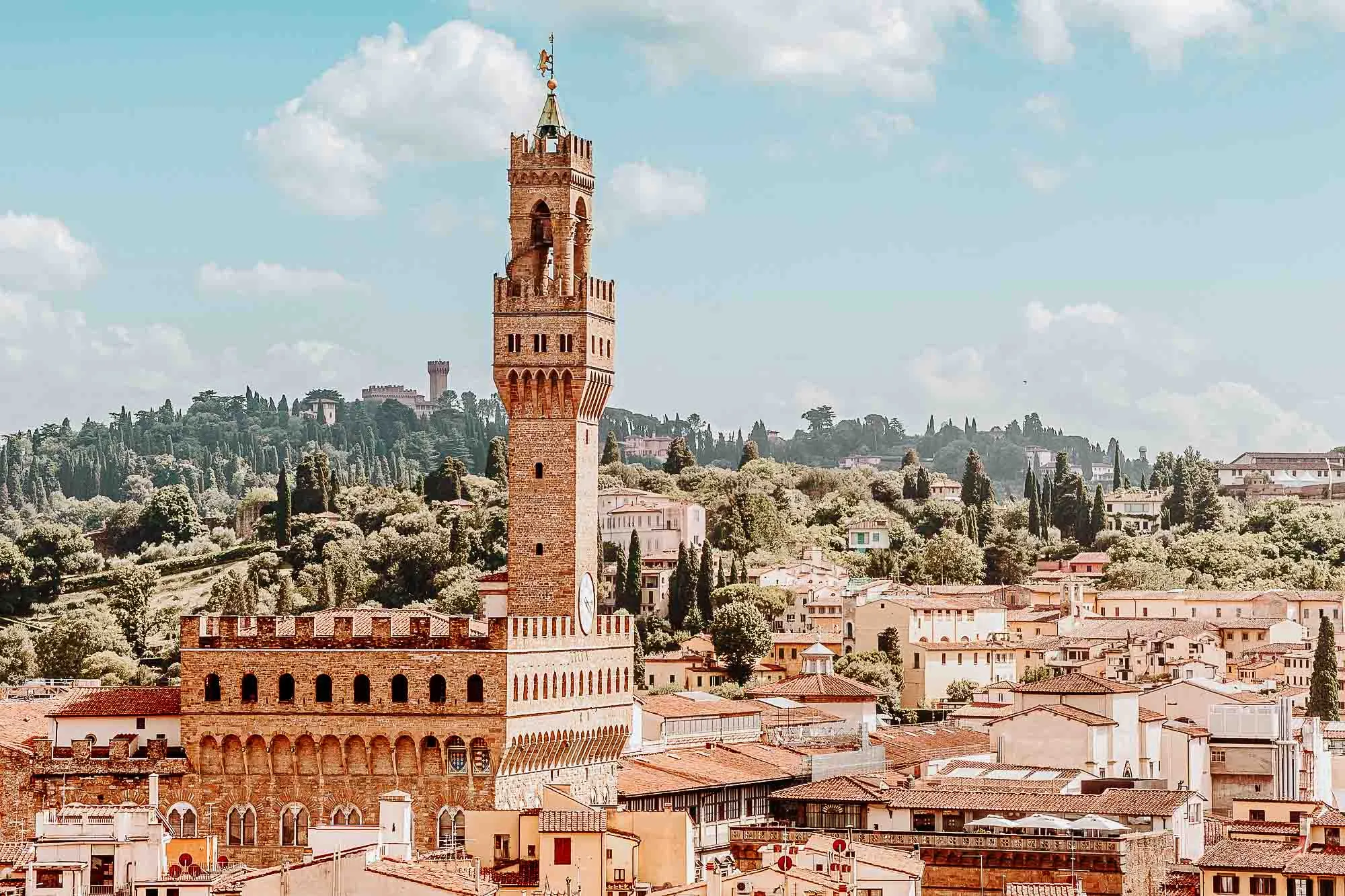
After the republican centuries and Medici consolidation, Florence became the capital of the Grand Duchy of Tuscany and later played a role in the national story of modern Italy. Political transitions reshaped institutions, educational systems, and heritage policies, while the city continued to negotiate between preservation and adaptation.
For a brief period in the nineteenth century, Florence even served as the capital of the Kingdom of Italy, a reminder that its influence was never only artistic. Administrative reforms, urban interventions, and modern infrastructure altered parts of the city, yet many historic layers remained legible. Today's visitor experiences this coexistence directly: medieval street patterns, Renaissance spaces, and modern civic functions operating side by side.
War, flood and restoration
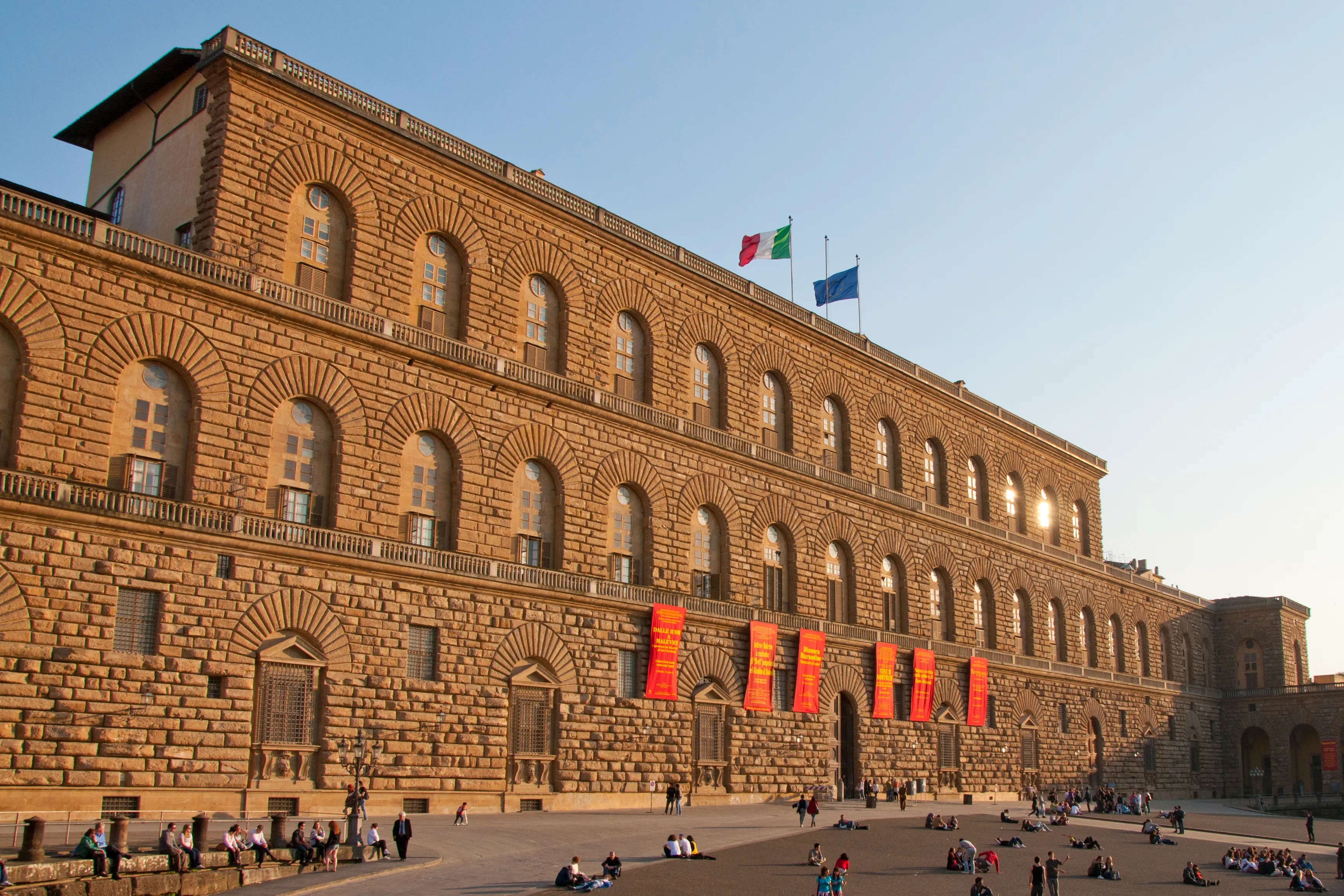
Florence's heritage has survived conflict, political upheaval, and environmental disaster. The 1966 flood of the Arno remains one of the most dramatic episodes in modern conservation history, damaging libraries, churches, paintings, and archives on a massive scale. International teams, local experts, and volunteers worked for years to rescue and restore materials that might otherwise have been lost forever.
This legacy of restoration still shapes museum practice in Florence today. Conservation labs, preventive care, climate control, and ongoing research continue behind the scenes so visitors can encounter fragile works safely. Understanding this effort can change how one experiences the city: each fresco and manuscript is not only a relic of the past but also the result of continuous present-day stewardship.
How to read Florence beyond the postcard

First-time visitors often focus only on famous icons, yet Florence reveals its depth in transitions: between monumental squares and quiet cloisters, between aristocratic palaces and artisan workshops, between polished museum narratives and rough traces of daily urban life. Looking closely at materials, inscriptions, reused stone, and neighborhood churches can open an entirely different layer of understanding.
A strong Florence Card itinerary leaves room for these in-between moments. Walk slowly between venues, notice workshop windows in Oltrarno, pause in lesser-known museums, and observe how local routines continue around global tourism. These pauses are not lost time; they are often where the city becomes most legible, intimate, and memorable.
Why the Florence Card can deepen your understanding
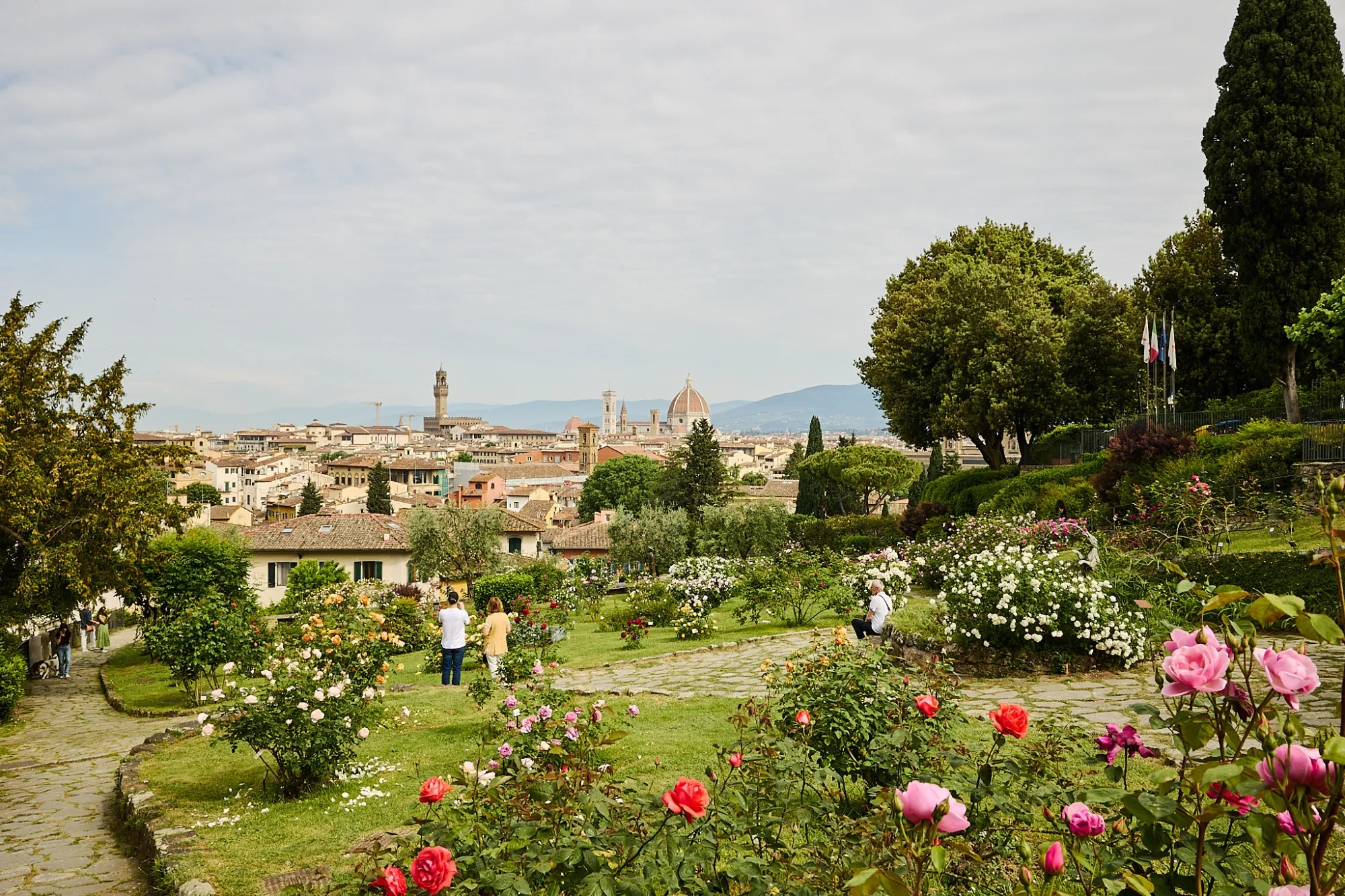
At first glance, the Florence Card appears to be a practical convenience tool. In reality, it can become an intellectual framework for understanding the city. Because it encourages multi-site exploration, it helps visitors connect painting to architecture, politics to patronage, engineering to symbolism, and private collecting to public memory.
When used thoughtfully, the card shifts your experience from isolated masterpieces to a coherent urban narrative. By the end of your visit, Florence is no longer just a set of famous names; it becomes a living system of ideas, institutions, ambitions, crises, and recoveries. That is the real value of this pass: not only access, but perspective.
Table of Contents
Before the Renaissance: foundations of Florence
Long before Florence became the stage for Renaissance genius, it was a Roman settlement known as Florentia, strategically placed along trade and military routes in the Arno valley. After the fragmentation of Roman authority, the city passed through unstable centuries marked by conflict, local elites, and shifting political loyalties. Yet these difficult centuries also forged the urban resilience that would later define Florence: a civic culture rooted in negotiation, competition, and institutional innovation.
By the High Middle Ages, Florence had become a dynamic commune with expanding walls, active guilds, and a rising merchant class. Its streets were crowded with workshops, markets, and parish life, and its social fabric was shaped by both collaboration and rivalry among powerful families. What visitors now admire as elegant stone architecture was born from turbulent beginnings. Seen through this lens, the Florence Card is not simply a pass for museum entry; it is a key to understanding how a city transformed instability into one of history's most enduring cultural revolutions.
Guilds, republics and urban identity
Florence's political identity grew from its guild system, where economic corporations did far more than regulate crafts. Major and minor guilds influenced public administration, taxation, diplomacy, and social order. In effect, the city experimented with forms of republican government that linked commercial success to civic responsibility. This framework did not produce harmony, but it generated an extraordinary public energy that pushed architecture, education, and patronage forward.
Piazza della Signoria embodies this civic DNA. The square, with Palazzo Vecchio as its commanding anchor, became a theater of policy, ritual, protest, and celebration. Public sculpture and civic pageantry communicated ideals of justice, strength, and legitimacy to residents and visitors alike. When you stand there today, you are standing in a place where politics and art were never separate spheres but two languages describing the same social ambition: to make the city visible, persuasive, and memorable.
The rise of banking and civic power
Florence's ascent cannot be understood without its financial system. Merchant-bankers developed sophisticated instruments of credit, accounting, and international exchange that connected the city to markets across Europe. Wealth produced by wool, silk, and finance did not remain abstract. It flowed into churches, chapels, libraries, hospitals, roads, and eventually collections that still define the city's museum landscape.
Families and companies competed not only for profit but for prestige and political influence. Patronage became a strategic language: funding an altarpiece, façade, or charitable foundation could reinforce both spiritual reputation and social authority. The result was a city where economic intelligence and visual culture evolved together. This is one reason Florence feels uniquely coherent to modern visitors: money, belief, status, and beauty were continuously negotiated in public view.
Humanism and the rebirth of classical thought
The Renaissance in Florence was not only an artistic style; it was an intellectual project. Humanists studied Greek and Roman texts, refined philology, debated ethics and governance, and developed educational ideals centered on rhetoric, history, and moral philosophy. Their work reframed the relationship between antiquity and the present, inspiring artists and patrons to imagine a new visual and civic language grounded in observation, proportion, and historical consciousness.
This cultural shift influenced everything from portraiture to urban planning. Classical motifs became tools for contemporary identity, and artists were increasingly seen as thinkers, not mere craftsmen. In practical terms, this meant that paintings and sculptures communicated more than religious devotion: they expressed intellect, status, memory, and civic belonging. A Florence Card itinerary through major collections reveals this transformation room by room, as medieval formulas gradually open into a broader and more self-aware vision of humanity.
The Medici: patrons, politicians, image-makers
No account of Florence is complete without the Medici, the banking dynasty that became one of the most influential patron families in European history. Their power operated through diplomacy, strategic marriages, financial networks, and calculated cultural investments. Commissioning architecture, collecting antiquities, and supporting artists were not decorative hobbies; they were instruments of authority that helped shape public memory and political legitimacy.
Yet Medici patronage was never isolated from broader Florentine society. Rival families, religious institutions, and civic authorities all negotiated influence in parallel, creating a dense ecosystem of patronage. Visiting Medici-associated sites today reveals this layered story: private ambition translated into public form, domestic spaces turned into cultural statements, and dynastic narratives embedded into the visual identity of the city itself.
Cathedrals, domes and engineering revolutions
Florence Cathedral and Brunelleschi's dome symbolize a turning point in architectural history. Building a vast masonry dome without traditional centering was not only a technical challenge but a statement of civic confidence. The project demanded mathematical ingenuity, material experimentation, and organizational coordination on a scale that captured the imagination of Europe.
The dome's silhouette still defines Florence, but its deeper significance lies in what it represents: a culture willing to merge craft knowledge, scientific curiosity, and public ambition. This engineering breakthrough inspired generations of architects and remains one of the clearest examples of Renaissance innovation in practice. Seeing it in context with nearby museums helps visitors understand that Florence's greatness was built as much by problem-solving as by inspiration.
Painting, sculpture and the new language of art
From Giotto's narrative clarity to Masaccio's volumetric realism, from Botticelli's poetic allegories to Michelangelo's monumental human form, Florence produced a visual vocabulary that transformed Western art. Perspective, anatomy, light, and emotional expression were studied with unprecedented intensity. Artists engaged with theology, philosophy, antiquity, and direct observation, creating works that still feel startlingly present.
What makes Florence unique is the continuity between workshop practice and institutional memory. Many sites included in Florence Card itineraries preserve not only finished masterpieces but also the contexts that produced them: patron chapels, civic spaces, monastic settings, and collection histories. As you move between these spaces, art history stops being abstract chronology and becomes a lived narrative of experimentation, influence, and ambition.
Faith, reform and public life
Religion shaped Florentine life at every level, from neighborhood confraternities to major ecclesiastical institutions. Churches were spaces of worship, but also repositories of art, sites of social aid, and stages for political symbolism. Sermons, processions, and devotional practices influenced public values and private behavior in ways that left permanent marks on the cityscape.
Periods of reform and tension, including the dramatic era associated with Savonarola, reveal how deeply moral discourse could affect art, collecting, and governance. Some works were celebrated, others challenged, and the city repeatedly renegotiated the relationship between beauty, authority, and belief. For modern visitors, this history adds nuance to every chapel and fresco: these were not static objects, but participants in urgent civic debates.
Courts, collections and museum origins
The museums visitors enjoy today emerged from centuries of collecting by courts, churches, scholars, and civic bodies. In Florence, dynastic collections gradually moved from private prestige to public patrimony, especially as political structures changed and cultural heritage became tied to civic identity.
This transition from princely possession to shared cultural resource is one of Florence's most important historical achievements. The Florence Card reflects this long arc: what was once accessible to narrow elites is now open, interpretive, and globally valued. Each ticket scan at a museum entrance quietly participates in that history of democratizing access to art.
Grand duchy to modern Italy
After the republican centuries and Medici consolidation, Florence became the capital of the Grand Duchy of Tuscany and later played a role in the national story of modern Italy. Political transitions reshaped institutions, educational systems, and heritage policies, while the city continued to negotiate between preservation and adaptation.
For a brief period in the nineteenth century, Florence even served as the capital of the Kingdom of Italy, a reminder that its influence was never only artistic. Administrative reforms, urban interventions, and modern infrastructure altered parts of the city, yet many historic layers remained legible. Today's visitor experiences this coexistence directly: medieval street patterns, Renaissance spaces, and modern civic functions operating side by side.
War, flood and restoration
Florence's heritage has survived conflict, political upheaval, and environmental disaster. The 1966 flood of the Arno remains one of the most dramatic episodes in modern conservation history, damaging libraries, churches, paintings, and archives on a massive scale. International teams, local experts, and volunteers worked for years to rescue and restore materials that might otherwise have been lost forever.
This legacy of restoration still shapes museum practice in Florence today. Conservation labs, preventive care, climate control, and ongoing research continue behind the scenes so visitors can encounter fragile works safely. Understanding this effort can change how one experiences the city: each fresco and manuscript is not only a relic of the past but also the result of continuous present-day stewardship.
How to read Florence beyond the postcard
First-time visitors often focus only on famous icons, yet Florence reveals its depth in transitions: between monumental squares and quiet cloisters, between aristocratic palaces and artisan workshops, between polished museum narratives and rough traces of daily urban life. Looking closely at materials, inscriptions, reused stone, and neighborhood churches can open an entirely different layer of understanding.
A strong Florence Card itinerary leaves room for these in-between moments. Walk slowly between venues, notice workshop windows in Oltrarno, pause in lesser-known museums, and observe how local routines continue around global tourism. These pauses are not lost time; they are often where the city becomes most legible, intimate, and memorable.
Why the Florence Card can deepen your understanding
At first glance, the Florence Card appears to be a practical convenience tool. In reality, it can become an intellectual framework for understanding the city. Because it encourages multi-site exploration, it helps visitors connect painting to architecture, politics to patronage, engineering to symbolism, and private collecting to public memory.
When used thoughtfully, the card shifts your experience from isolated masterpieces to a coherent urban narrative. By the end of your visit, Florence is no longer just a set of famous names; it becomes a living system of ideas, institutions, ambitions, crises, and recoveries. That is the real value of this pass: not only access, but perspective.